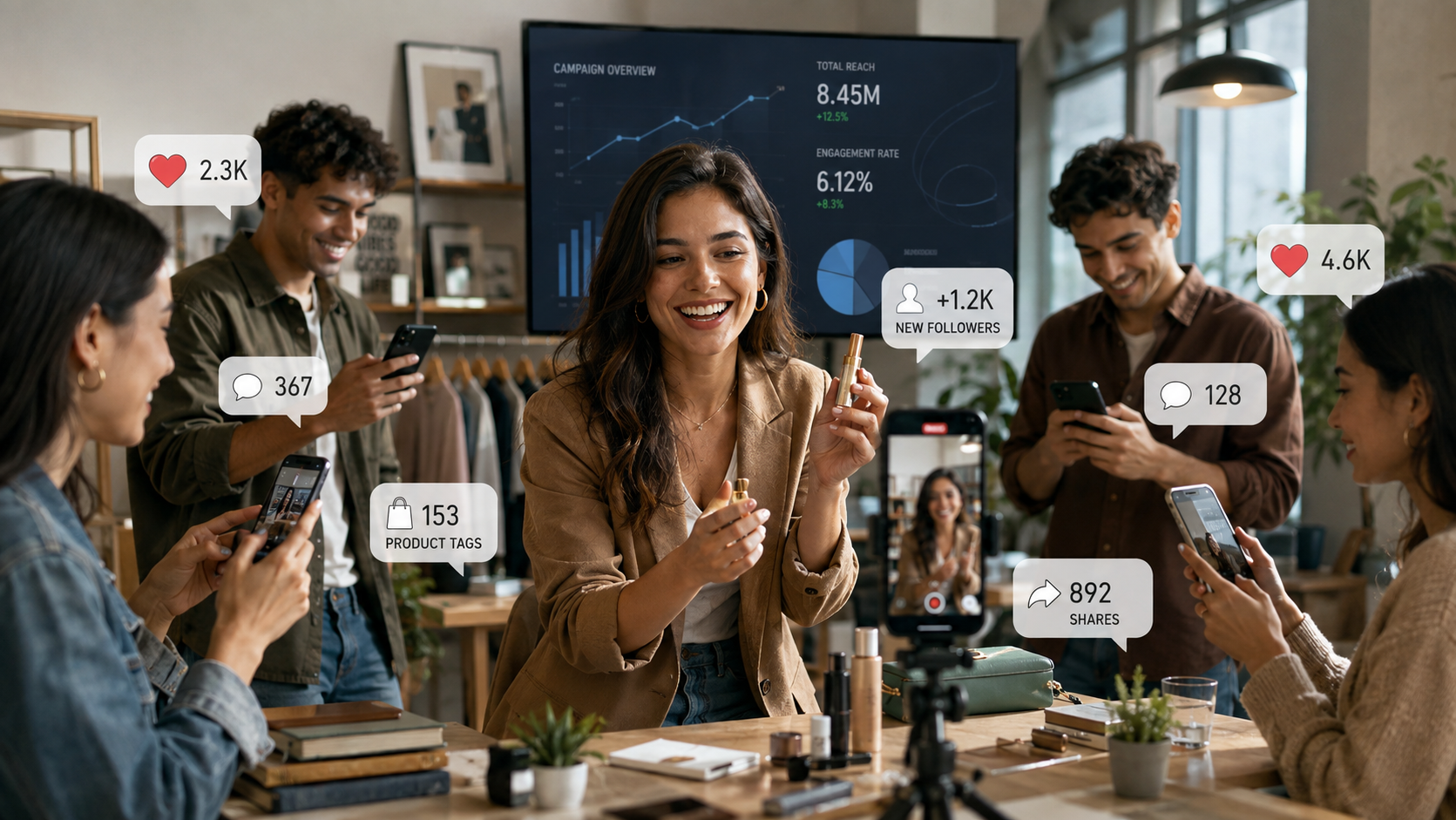
The rise of influencers has transformed consumers from passive audiences into active marketing participants, reshaping how brands communicate, build trust, and influence purchasing decisions through distributed digital networks.
When Consumers Became Marketers: How Influencers Redefined the Role of Marketing
Marketing traditionally operated on a sender–receiver model: firms develop propositions, structure messaging, and
disseminate through controlled channels. Consumers, positioned at the tail end of this process, were expected to
receive, interpret, and act upon these firm-crafted signals. That model is now obsolete. The rise of influencers—individuals who create, curate, and relay content to social audiences—has blurred the historical boundary between consumers and marketers. Today, ordinary users are increasingly performing marketing functions, shifting the locus of influence away from centralized corporate authority toward distributed, networked ecosystems.
The Structural Shift in Marketing Authority
In 2023, the global influencer marketing industry was valued at approximately $21.1 billion, more than double its size in 2019, reflecting rapid institutional investment in creator-driven channels. MDPI
Brands are increasingly ceding narrative control to dispersed networks of influencers:
93 % of marketers reported incorporating influencer marketing into their campaigns, with 63 % planning increased budget allocation. IQFluence
Around 26 % of brands allocate over 40 % of their marketing budgets to influencer partnerships, underscoring a structural reallocation of strategic resources. Amra and Elma LLC
93 % of marketers reported incorporating influencer marketing into their campaigns, with 63 % planning increased budget allocation. IQFluence
Around 26 % of brands allocate over 40 % of their marketing budgets to influencer partnerships, underscoring a structural reallocation of strategic resources. Amra and Elma LLC
These shifts signify more than tactical experimentation; they represent a reconfiguration of marketing authority from firms to participants who straddle the roles of consumer and communicator.
Trust as the Core Economic Engine
Marketing’s fundamental challenge has shifted from reach to credibility. Survey data consistently show that consumers place significantly greater trust in individuals than in traditional advertising:
Approximately 69 % of consumers report trusting influencer recommendations when making purchase decisions. AWISEE.com - Link Building Agency
A Nielsen study finds that 92 % of consumers trust recommendations from individuals over branded content. odore.com
Approximately 69 % of consumers report trusting influencer recommendations when making purchase decisions. AWISEE.com - Link Building Agency
A Nielsen study finds that 92 % of consumers trust recommendations from individuals over branded content. odore.com
This trust premium matters. Influencer content frequently drives purchasing behavior: 86 % of consumers report making at least one influencer-inspired purchase annually, and almost half (49 %) rely on influencer recommendations in their purchase journey. Sprout Social+1 In contrast, traditional advertising channels—while still relevant—struggle to achieve equivalent engagement or credibility in the current media environment.
The Consumerization of Marketing Labor
The transactional line between consumers and marketers has collapsed into a continuum of participation. Today’s consumers perform functions once confined to organized marketing teams:
They generate content (reviews, unboxing videos, narratives) that brands cannot script or fully control;
They serve as gatekeepers of trust, shaping social validation processes that inform broader audiences;
They act as de facto brand ambassadors, often without formal compensation.
They generate content (reviews, unboxing videos, narratives) that brands cannot script or fully control;
They serve as gatekeepers of trust, shaping social validation processes that inform broader audiences;
They act as de facto brand ambassadors, often without formal compensation.
Notably, influencers and everyday users are not interchangeable in impact. Empirical evidence highlights the superior performance of micro and nano-influencers:
Engagement rates for micro-influencers regularly exceed those of macro or celebrity influencers—often by a factor of 2–4x—because of deeper, niche trust. RSIS International
Nano-influencers can deliver engagement rates that significantly outpace larger accounts, suggesting that community intimacy matters more than scale alone. Sci-Tech Today
Engagement rates for micro-influencers regularly exceed those of macro or celebrity influencers—often by a factor of 2–4x—because of deeper, niche trust. RSIS International
Nano-influencers can deliver engagement rates that significantly outpace larger accounts, suggesting that community intimacy matters more than scale alone. Sci-Tech Today
These patterns suggest that the most effective modern “marketers” are not large audiences but engaged audiences.
Financial and Strategic Implications
The economic rationale for influencer participation is compelling. Brands report outsized returns relative to traditional channels:
Influencer marketing delivers average returns of $5.78–$6.50 for every dollar spent, often outperforming conventional digital advertising by a substantial margin. AWISEE.com - Link Building Agency+1
Certain high-performing campaigns report ROI as high as 18:1 under optimized conditions. AWISEE.com - Link Building Agency
Influencer marketing delivers average returns of $5.78–$6.50 for every dollar spent, often outperforming conventional digital advertising by a substantial margin. AWISEE.com - Link Building Agency+1
Certain high-performing campaigns report ROI as high as 18:1 under optimized conditions. AWISEE.com - Link Building Agency
Such performance has encouraged strategic budget shifts:
Nearly 90 % of marketers plan to allocate budget to influencer channels, with 62 % increasing existing allocations. VISION_FACTORY
Nearly 90 % of marketers plan to allocate budget to influencer channels, with 62 % increasing existing allocations. VISION_FACTORY
This reallocation reflects a broader reorientation of marketing economics: marketers are embracing distributed authenticity as a core lever of persuasion.
Reconfiguring Governance and Brand Strategy
The decentralization of influence presents organizational challenges. Traditional governance structures—built on central control, rigid approval processes, and unidirectional messaging—are ill-suited for ecosystems where consumers co-produce brand meaning.
Modern brand governance must emphasize:
Orchestration over control: facilitating environments where influencers can generate credible, contextually relevant content;
Shared value creation: aligning brand objectives with influencer audiences in ways that extend beyond transactional sponsorships;
Measurement and accountability: focusing on outcomes such as conversion lift, sentiment change, and network resonance rather than vanity metrics alone.
Orchestration over control: facilitating environments where influencers can generate credible, contextually relevant content;
Shared value creation: aligning brand objectives with influencer audiences in ways that extend beyond transactional sponsorships;
Measurement and accountability: focusing on outcomes such as conversion lift, sentiment change, and network resonance rather than vanity metrics alone.